How to collect photographs from family before a funeral
Kitty, Carn · 9 September 2026 · 4 min read
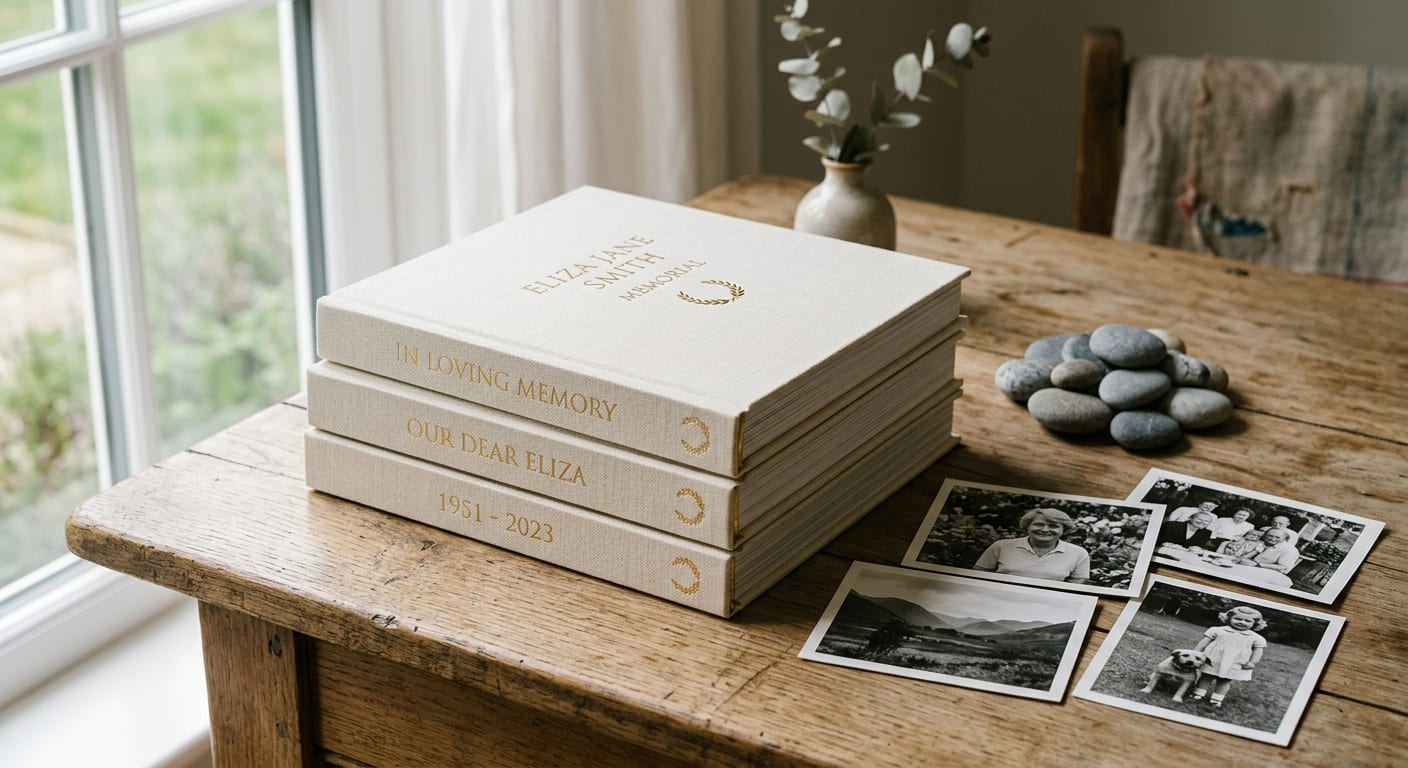
Someone has volunteered you. There is a slideshow to make, or a board at the wake, or an order of service that needs a photograph on the front by Wednesday, and the pictures are spread across eleven phones, two lofts and a Facebook account nobody can get into.
This is a logistics problem dressed as an emotional one. Treat it as logistics and it becomes manageable.
Ask for a number, not for help
"Send me any photos you have" produces nothing. It is an unbounded task, and everyone assumes someone else is doing it.
Ask each person for three. A number that small is achievable on a phone in ten minutes, while the vaguer ask sits on the list for a fortnight. And if you ask twenty people for three, you have sixty photographs, which is more than you can use.
Be specific about what you want, too. "Three photos, ideally not from the last year, ideally with other people in them" gets you a better set than "any photos", because most people will otherwise send the most recent thing on their camera roll.
Give one place for them to land
The failure mode is scatter. Four arrive by WhatsApp, three by email, one by text at 11pm, two on Facebook Messenger from a cousin you have not spoken to since 2015. Then you spend an evening screenshotting, which halves the resolution and gives you something unusable for print.
Pick one destination and say it in every message. A shared album, a folder link, a memorial page, whatever you like, as long as it is one thing and the link is in the message rather than "I will send you a link later".
Say it in the same sentence as the ask:
Could you put three photos of Dad here by Thursday? Anything from before 2015 especially. [link]
Watch the resolution
Two things quietly ruin photographs for print. WhatsApp compresses images unless the sender picks "document" rather than "photo". And screenshots of photographs throw away most of the detail.
If a picture is going on an order of service or into a book, you want the original file. If someone can only send it through WhatsApp, ask them to send it as a document, or to AirDrop or email it instead. It sounds fussy. It is the difference between a sharp face and a grey smudge at A5.
The older photographs are in a drawer, not a phone
The best pictures of someone who died at eighty are prints, and they are in a biscuit tin at a sibling's house. Nobody is going to scan them in time.
Photograph them with a phone instead. It works far better than people expect if you do three things: lay the print flat, use daylight from a window rather than the flash, and stand directly over it rather than at an angle. Take the picture, do not crop it, send the original.
If someone in the family has a flatbed scanner it is worth an afternoon, but a phone and a window will get you most of the way.
Do not promise to return anything the same week
If you borrow prints, they will end up in a pile on your kitchen table while you do everything else a funeral demands. Photograph them at the house if you possibly can, and hand them straight back. Losing an aunt's only picture of her mother is a wound that lasts longer than the funeral.
Ask for the story with the picture
Whenever anyone sends one, ask what was happening in it. Not always, but often, you get something like: "That is the day he retired. He would not wear the hat but they made him."
In six months, nobody will remember which day it was. The photograph without the story is a man in a hat. With the story it is the day he retired and would not wear the hat.
This is the part people most regret not doing, and it costs one extra line in the message. If the family has a memorial page, a photograph and its story can arrive together rather than the caption going missing between apps.
A timetable that works
- ● Day one: pick where photographs will land, and message everyone with the link, the number three, and the deadline.
- ● Day two: message the older relatives individually. They are the ones with the best pictures and the least likelihood of using a link.
- ● Day three: one reminder. People are not ignoring you, they are grieving and forgetting things.
- ● Day four: work with what you have. You will have enough.
And keep collecting afterwards. Photographs keep surfacing for years, usually from the people who were too overwhelmed to look in the first week. The ones that arrive in March are often the best of the lot.
Kitty — Kitty writes and edits the Carn journal.
Also worth reading
How to ask people for memories without it feeling like homework
Most people want to contribute something and never do, because the ask was too big. Smaller questions get better answers.
What happens to someone's Facebook, Instagram and Google account when they die
What each platform does, what a family can actually get, and the two things worth doing before you request anything be deleted.
What to do in the first 48 hours after someone dies
A short, practical list for the UK. What has to happen now, what can wait a fortnight, and the one thing almost everyone forgets.
Gather what people remember
One link, one QR code, and anyone who loved them can add a memory from their phone. Free for the first 90 days.