How to ask people for memories without it feeling like homework
Kitty, Carn · 8 September 2026 · 3 min read
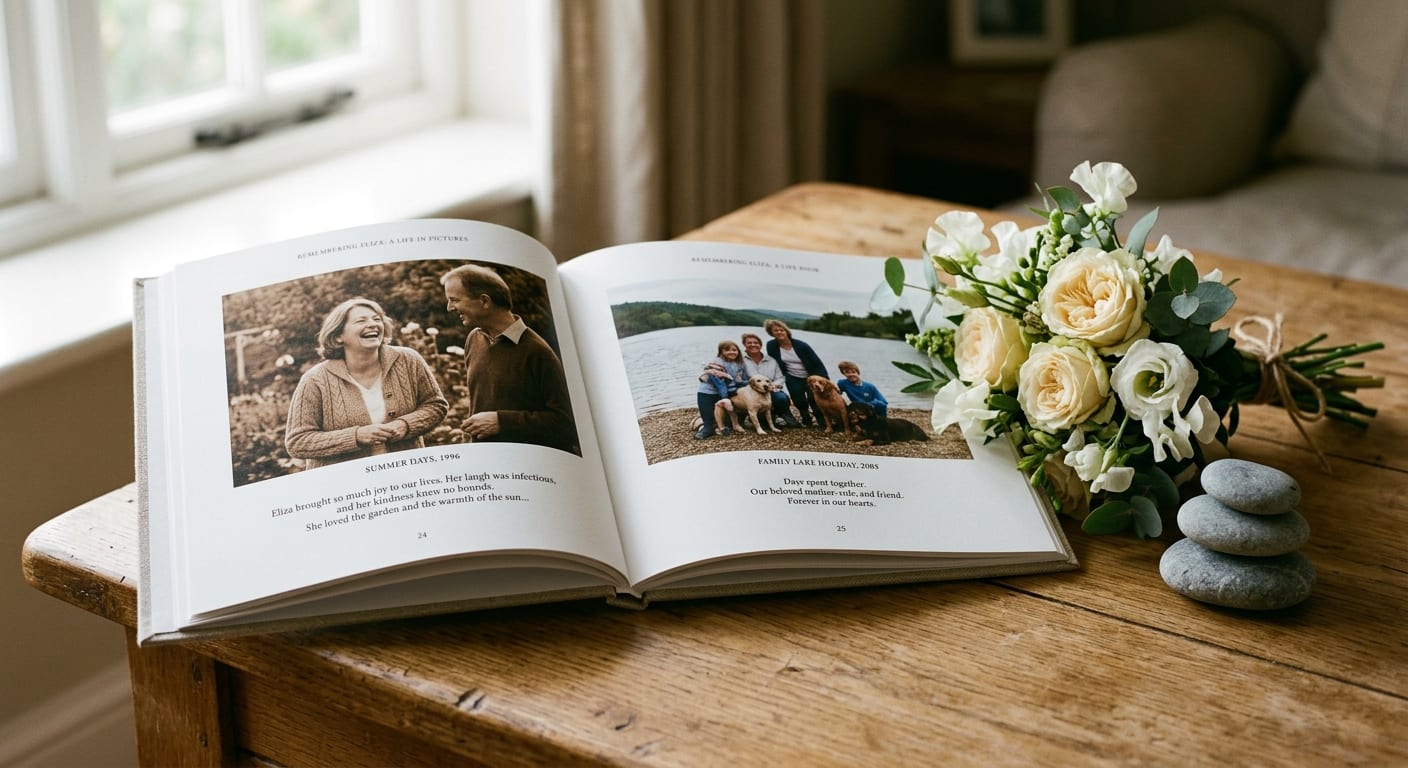
You have decided to gather what people remember, for a book or a page or just for yourselves. You send a message to forty people saying: please share your memories of Mum.
Nine reply. Of those, six write some version of "she was a wonderful woman and will be greatly missed".
The other thirty-one are not indifferent. They have plenty to say. The ask defeated them.
Why the open ask fails
Asked to summarise a person they loved, in writing, for an audience of the bereaved family, most people freeze. It feels like an exam with no right answer, and the stakes feel enormous. So they put it off until the embarrassment of being late makes it easier to say nothing at all.
The ones who do reply write eulogy-language, because that is the register the question seems to demand. Wonderful. Much loved. Sorely missed. All true, all interchangeable, and nobody will read them twice.
Ask a smaller question
Replace "share a memory" with something so specific it can be answered without thinking:
- ● What is the first thing you picture when you think of him?
- ● What did she always say?
- ● Where were you the first time you met him?
- ● What did he always have in his pockets?
- ● What was she like to work with on a bad day?
- ● What food do you associate with her?
These get answers in thirty seconds, and the answers are enormously better. "He always had a pen and a folded envelope in his shirt pocket, and he wrote everything down on the envelope" is worth more than a paragraph on what a good man he was.
Ask one question at a time
A list of six questions reads as a form. Send one. In a fortnight, if you want more, send another.
Different questions also reach different people. "What was he like to work with?" opens a door for colleagues who feel they have no standing to write about a father or a husband. "What did she always say?" gets grandchildren who would not know where else to start.
Tell people how long it should be
Say "a sentence or two is plenty" and mean it. Unbounded length is the second reason people stall. Remove the worry that they owe you an essay and you will get four times as many replies.
Some people will write pages anyway. That is fine. They were always going to, and the permission to write two lines is not for them.
Make it possible to be anonymous
Some of the most moving things people contribute come with no name on them. An affair that was never acknowledged. A debt that was quietly forgiven. A kindness at a hospital bed that the person never told anyone about.
If people have to sign their name, those stories stay untold. If they can leave something without one, they arrive.
Ask twice, months apart
The first ask catches people while everything is still raw and administrative. A second ask, three or four months later, catches people who could not face it at the time and now can.
Anniversaries work well for this, and they give the question a natural reason to exist: "It is a year on Sunday. If you have a memory of Dad you have never told us, we would love it."
Say thank you in public
When something good arrives, tell the person what it meant. "I had never heard about the envelope. Mum cried." They will tell three other people, and those three will contribute.
That is how a memorial fills up. Not through one broadcast to forty people, but through a handful of good answers that make everyone else realise what kind of thing is wanted here.
And give it somewhere to live
The practical trap is the one nobody plans for: the replies come back through six different apps, and within a year they are scattered across a phone that will eventually be replaced.
Whatever you use, use one place, and make sure it is somewhere other people can add to without asking your permission. That is precisely what Carn is for, but a shared document works too. The method matters more than the tool.
Kitty — Kitty writes and edits the Carn journal.
Also worth reading
How to collect photographs from family before a funeral
You have four days, a slideshow to build, and eleven people who all say they will "have a look tonight". A practical method that gets you the pictures.
What happens to someone's Facebook, Instagram and Google account when they die
What each platform does, what a family can actually get, and the two things worth doing before you request anything be deleted.
What to do in the first 48 hours after someone dies
A short, practical list for the UK. What has to happen now, what can wait a fortnight, and the one thing almost everyone forgets.
Gather what people remember
One link, one QR code, and anyone who loved them can add a memory from their phone. Free for the first 90 days.